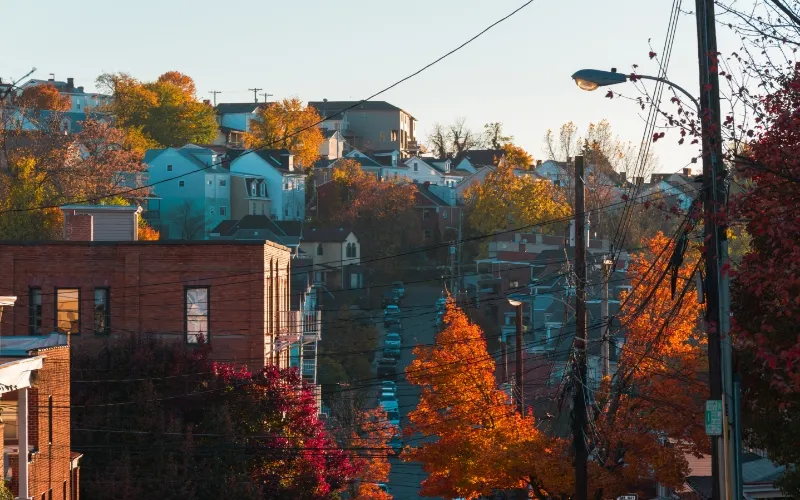
Pittsburgh has the second-oldest housing stock in the country, with the typical home bought in 2024 about 68 years old, according to Redfin. A great many of those houses are heated by a hot water boiler feeding cast iron radiators or baseboard, and the boiler in the basement is often older than the current owners. This post covers hot water systems; a steam system is a different job and needs its own conversation. Hot water boiler replacement Pittsburgh looks like a simple swap until the work begins, because a modern boiler is a different machine from the one it replaces, and it has to work with piping, radiators, and a chimney that were all designed for something else.
What the Old Boiler Was Built to Do
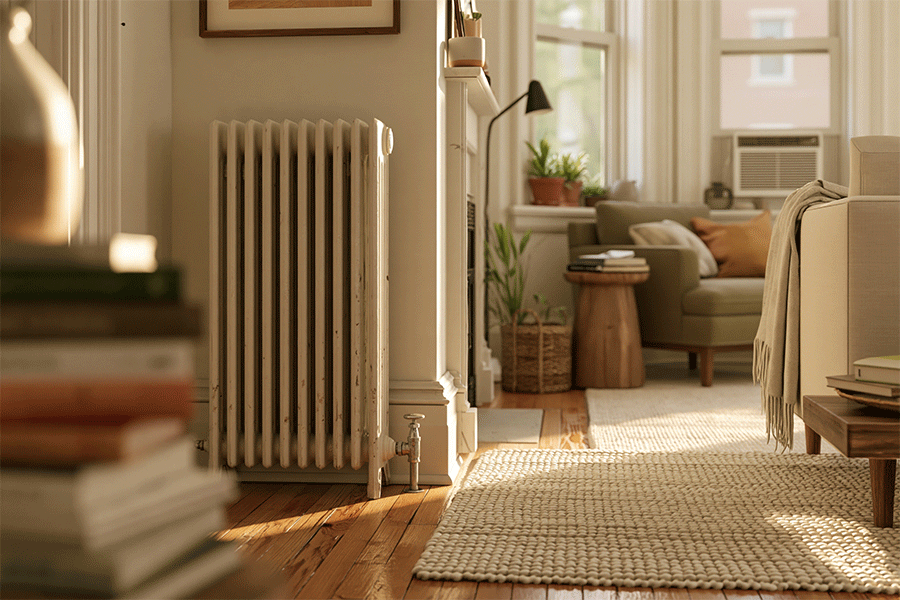
The cast iron boiler that shipped in the 1960s or 1970s was heavy, held a lot of water, and ran at around 180 degrees whenever it fired. It was generally over-sized, since extra capacity was cheap insurance. It vented through the house’s masonry chimney by natural draft. Radiators sized for that hot water gave off steady, even heat, and the mass of water in the system smoothed out the swings.
That design lasts for decades, which is why so many of them are still running. It fails slowly. Sludge settles in the bottom of the boiler, and in the radiators, sections corrode and weep; the pressure needs topping up more often, and air collects in the high points of the piping and makes radiators gurgle or stay cold. By the time a boiler is leaking from a section, boiler replacement Pittsburgh is usually the practical answer, and the house gets to choose what comes next.
Why a Condensing Boiler Changes the Math
High-efficiency boilers get their efficiency by condensing the water vapor in the exhaust and recovering the heat that normally goes up the chimney. That only happens when the water returning to the boiler is cool enough to pull the heat exchange below the dew point. Condensing boilers are designed so that return water stays below roughly 130 degrees, and efficiency rises as return temperature falls.
Old radiators were designed to run on water around 170 to 180 degrees. That sounds like a mismatch, and on the coldest day of the year it can be, but two things work in the owner’s favor. Many older homes have had windows, attic insulation, or air sealing improved since the radiators were sized, so the radiators now have more capacity than the house needs. And an outdoor reset control lowers the boiler’s water temperature as the weather warms, so the boiler can run noticeably cooler water through much of the heating season and reserve the hottest water for the coldest nights. The system condenses most of the time, and the efficiency gain follows.
Whether it works in a given house comes down to a room-by-room heat loss calculation and a look at how much radiator surface each room has. A room with a small radiator and a lot of exterior wall may need a larger one, or may be a reason to leave the design water temperature higher.
Sizing: Why Bigger Is Not Safer
The old rule of thumb was to oversize, and the result is a boiler that fires hard, satisfies the thermostat in a few minutes, and shuts off. That short cycling wastes fuel and wears out ignites, pumps, and controls. Sizing guidance keeps a conventional boiler close to the calculated design load, with an allowance for setback recovery. The usual solution is a modulating boiler, which turns its burner down to match the load, so its lowest output sits well under the typical demand of the house.
An installer who sizes the new boiler off the old nameplate is repeating the old mistake. The calculation should come from the house.
The Chimney Problem Nobody Mentions Until Installation Day
A condensing boiler is sealed-combustion. It draws air from outside and vents through PVC pipe out a side wall, and it no longer uses the masonry chimney. That looks like a bonus until the gas water heater, which often shares the chimney, is left alone in a flue sized for two appliances. A single small water heater in a large, cold masonry chimney can drive poor draft and condense the flue gas inside the masonry, which erodes mortar and can let exhaust back into the house.
The fix is to line the chimney to fit the water heater, or to move the water heater to its own direct-vent or power-vent setup, which a plumber handles, and a good boiler installer checks the chimney before the old boiler comes out. Pittsburgh’s older brick houses have a lot of chimneys, and this step is where careful replacements and rushed ones part ways.
Flushing, Air, and the Piping Around the Boiler
The boiler is only part of the system. Decades of sludge in the old piping will foul a new heat exchange, so the system has to be flushed, and a dirt separator and air eliminator near the boiler keep new debris and air from collecting again. The expansion tank, the circulator pumps or zone valves, and the pressure settings all get checked against the new equipment. Radiators with stuck bleed valves get fixed while the system is open. Replacing one component of an old system without looking at the rest leaves the old problems waiting.
Keeping the New Boiler Healthy
A condensing boiler produces acidic condensate, which drains through a neutralizer and must keep flowing, so the condensate trap and drain need an annual look. Yearly heating system maintenance checks system pressure, bleeds air, inspects valves and connections, cleans the heat exchange, and tests the safety and ignition controls. When something goes wrong in the meantime, signs such as leaks at the base, banging or gurgling, cold spots in the house, falling pressure, or a unit that won’t fire all call for heating system repair before a small fault becomes a lockout.
Planning a Boiler Replacement Before the Coldest Weeks Force the Decision
A boiler tends to fail on the coldest night of the year, not on a mild day, and an emergency replacement leaves no time for a heat loss calculation, a chimney inspection, or a comparison of options. A homeowner with an aging boiler who plans the work before it fails gets a boiler system installation or boiler replacement Pittsburgh designed around the house, not whatever fits on the truck.
To find out what a replacement would involve in your home, request a free equipment estimate from Boehmer Heating & Cooling or call 412-381-4100 today for boiler replacement Pittsburgh.